Science

Your gut is a garden.
Neglect it, and the soil runs dry. Nurture it, and everything thrives.

Modern living has starved our inner ecosystem.
Due to industrialization, processed foods, and other realities of modern life, the biodiversity in our microbiomes has severely diminished over time. 95% of adults don’t consume enough fiber. Nearly half of us live with chronic digestive issues. Our microbiome is the root system of our health, connected to our digestion, our metabolism, our immune function, and brain and mood—and it’s struggling.
Mind
Higher fiber intake is linked with decreased risk of depression. (Every daily additional 5g of fiber is associated with ~5% lower risk in adults.)*
Scientific Research
Dietary fiber intake, depression, and anxiety: a systematic review. https://pubmed.ncbi.nlm.nih.gov/36692989/
Fiber intake and fiber intervention in depression and anxiety. https://pubmed.ncbi.nlm.nih.gov/38007616/
Gut
Prebiotic fibers (e.g., inulin/GOS) increase beneficial bacteria like Bifidobacterium in randomized trials and support digestive health.*
Scientific Research
Dietary fiber intake and gut microbiota in human health (review). https://www.ncbi.nlm.nih.gov/pmc/articles/PMC9787832/
Randomised clinical trial of fibre-rich legumes targeting colonic biomarkers. https://bmjopen.bmj.com/content/14/2/e081379
Colon
High fiber intake is linked with reduced risk of diverticular disease. Consuming about 30g per day is associated with a 41% lower risk vs. low intake in meta-analysis.*
Scientific Research
Dietary fiber intake and gut microbiota in human health (review). https://www.ncbi.nlm.nih.gov/pmc/articles/PMC9787832/
Randomised clinical trial of fibre-rich legumes targeting colonic biomarkers. https://bmjopen.bmj.com/content/14/2/e081379
Joints
Fiber-driven SCFAs help balance joint inflammatory pathways; a 6-month prebiotic RCT in knee OA improved physical function and body composition, with mechanistic reviews linking SCFAs to cartilage/subchondral protection.*
Scientific Research
Effect of prebiotic fiber on physical function and gut microbiota in adults with knee osteoarthritis and obesity (RCT). https://link.springer.com/article/10.1007/s00394-024-03415-w
Links between short-chain fatty acids and osteoarthritis from pathology to clinic via gut–joint axis (review). https://stemcellres.biomedcentral.com/articles/10.1186/s13287-025-04386-3


Fiber has disappeared from our diets
A century ago, people ate 5–10x more fiber than today. As fiber intake dropped, so did microbial diversity—and so did our resilience.
Low fiber = low biodiversity.
Ultra-processed diets deplete your gut’s “soil.”
Result: weaker immunity, slower metabolism, and sluggish digestion.
When our biodiversity shrinks, we feel it.
Epidemiological studies show that lower microbiome diversity correlates with higher rates of obesity, autoimmune disease, and metabolic dysfunction. The science is clear: When our gut ecology collapses, our health falters.*
Your Body On Fiber
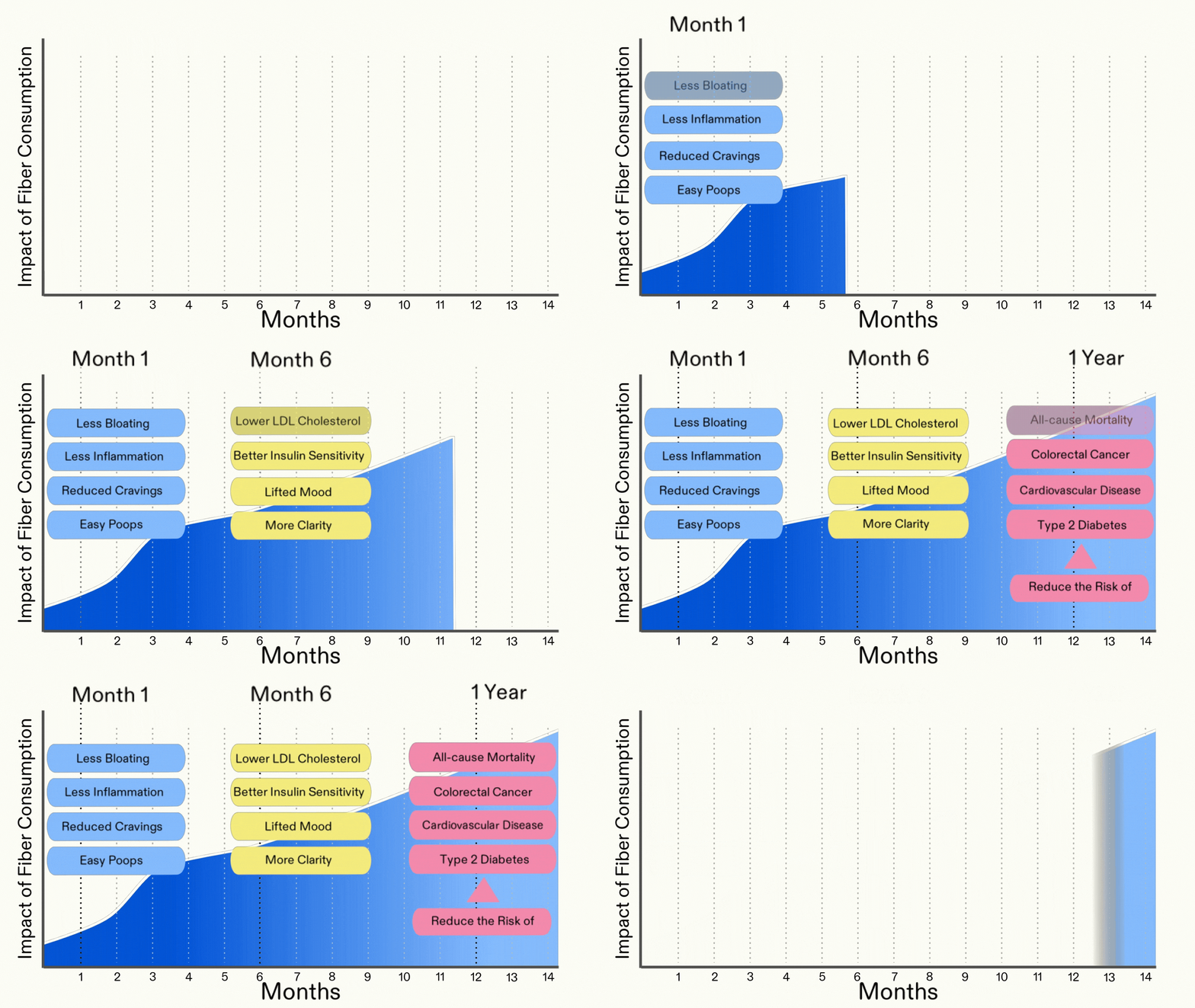
Rebuilding Your Inner Ecosystem
Rather than a single fiber or probiotic quick fix, LOAM was engineered as a fertilizer for your inner garden, a diverse blend of prebiotic fibers designed to engage with your microbiome across the entire colon.
By combining fibers that ferment at different rates and in different gut regions, LOAM ensures comprehensive nourishment for your microbiome, supporting the proximal to distal colon.

Stronger Immunity*

Better Digestion*

Metabolic Balance*

Mind &
Mood*

1. Ascending Colon | First Fuel
This is where fermentation begins. Short-chain fibers are quickly broken down by microbes here, producing energy and supporting the first wave of gut bacteria. A mono-fiber supplement often stops here, leaving the rest of the gut unfed.
The LOAM difference: XOS fiber (sourced from corn husk) ferments here.
2. Transverse Colon | The Center of Microbial Diversity
Midway through the gut is where slower-fermenting fibers shine. They fuel a broad range of bacteria, producing short-chain fatty acids like butyrate that strengthen the gut lining, regulate immunity, and stabilize blood sugar. Without fiber diversity, this critical "garden bed" goes undernourished.
The LOAM difference: Rhamnogalacturonan-I (sourced from carrots) and PHGG (sourced from guar) ferment here.
3. Descending Colon | Lasting Benefits
Only the most complex fibers reach the descending colon. Here, they continue fueling microbial growth, preventing stagnation, improving bowel regularity, and ensuring the full length of the gut thrives.
The LOAM difference: Soluble Wheat Dextrin, Soluble Corn Fiber, and Tapioca Dextrin all ferment here.


From my clinic to your daily routine.
Hi there! I'm Dr. Karan. I'm a doctor and gut health expert who has seen the downstream effects of poor gut health in my patients: bloating, inflammation, metabolic dysfunction, and GI disease. So, I got to work. I tried over 60 fiber products, and came away with a clear truth:
Our microbiome is endangered, and we don’t have the right tools to help it flourish.
LOAM was born to change that.


